


St Ives Showground Scores a Century
Ku-ring-gai Council celebrates 100 year milestone, not with candles, with trees.
By Rita Bratovich
On Sunday May 3, volunteers joined Ku-ring-gai Council to plant 100 native trees and an additional 100 groundcover plants, marking the centenary of one of the region’s most beloved community spaces. The initiative was both a celebration and an investment in the future, restoring habitat, strengthening biodiversity and enhancing the Showground’s unique bushland environment.

Ku-ring-gai Mayor Christine Kay praised the community effort, noting the significance of the site’s natural setting.
“St Ives Showground has a magnificent bushland setting and is home to the Duffys Forest Endangered Ecological Community,” she said.
The symbolic planting of “100 trees for 100 years” reflects the remarkable journey of a site that has continually evolved while remaining at the heart of community life.
The story of St Ives Showground begins long before playgrounds, adventure courses and farmers markets arrived. In the early twentieth century, the district was a thriving agricultural area, dotted with orchards and market gardens supplying produce to Sydney families and businesses.
In 1920, local growers formed the St Ives Agricultural and Horticultural Association and began showcasing their produce at Hassall Park on Mona Vale Road. As the event grew in popularity, the need for a permanent venue became clear. That opportunity arrived in 1926 when the Association was granted 53 hectares of Crown land to establish the Northern Suburbs Showground, now known as St Ives Showground.
At the time, the surrounding bushland was known locally as Paddy’s Forest. Nearby rocky outcrops earned the name First Rocks from timber workers harvesting the area’s trees. The landscape also held deep Aboriginal heritage significance, with reports of numerous engravings in the vicinity before suburban development transformed the district.
What began as a gathering place for farmers quickly became a focal point for the wider community. Like many public spaces across Australia, the Showground took on a very different role during World War II.
Between 1941 and 1944, the site was occupied by the Australian Army, primarily the 18th Battalion of the Ku-ring-gai Regiment. The arenas that once hosted agricultural displays were transformed into military training grounds. Soldiers marched across the open fields, practised bayonet drills using sandbag targets suspended from wooden frames and conducted shooting exercises among the surrounding sandstone escarpments.

The military presence was deliberately understated to avoid attracting attention from potential Japanese aerial reconnaissance. Nevertheless, the army constructed workshops, mess halls, a bar and essential infrastructure including sewage channels.
Rows of tents housed troops in camps north and west of the main arena. Today, traces of that wartime chapter remain hidden among the trees. Visitors can still find remnants of building foundations, former mess huts and a brick ablution block slowly being reclaimed by the bush.
One of the most intriguing relics is a large concrete three-dimensional map built in 1943. Depicting Broken Bay and Sydney’s Northern Beaches, it was used to familiarise soldiers with local geography and identify potential landing points for an invading force. More than 80 years later, the map survives, though exposure to the elements has left it vulnerable to deterioration.

When peace returned, the Showground gradually resumed its original purpose. Military buildings were sold, relocated or repurposed, and in 1949 the St Ives Show returned after a wartime hiatus.
Agricultural shows continued until 1968, celebrating rural traditions even as suburban development accelerated around them. In 1975, the newly formed Northern Suburbs Agricultural and Horticultural Society revived the event, establishing what remains a popular annual tradition.
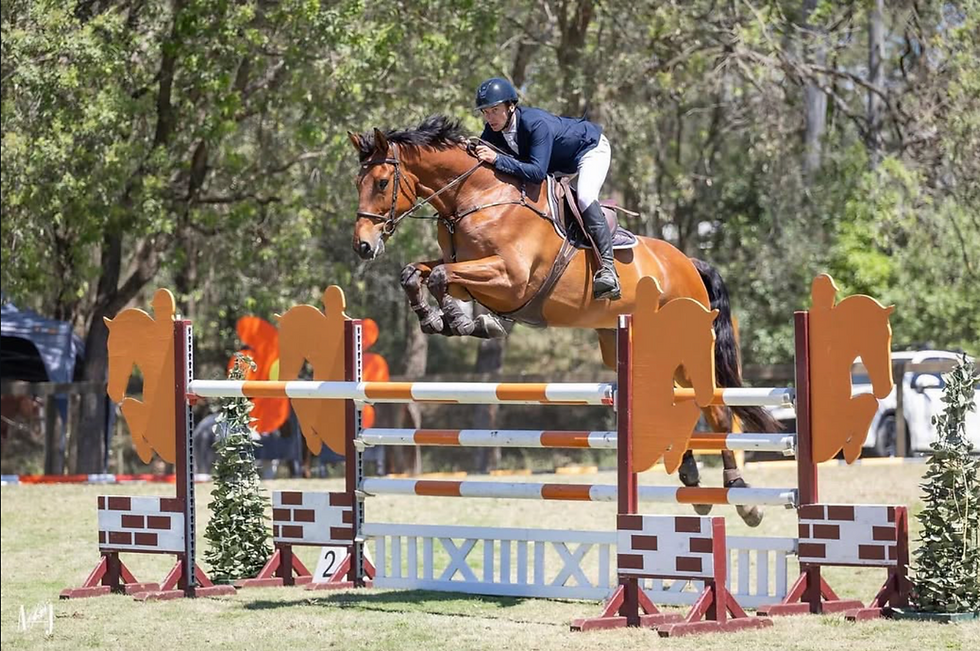
The Showground’s versatility has always been one of its defining features. Over the decades it has hosted equestrian events, community gatherings, dog shows and outdoor recreation. It has even welcomed rock music history.
On 4 March 1984, the grounds became the venue for the Rock ’n’ Roll Fair, a major outdoor music festival featuring an impressive line-up including New Zealand legends Split Enz, alongside Australian favourites The Church, Hoodoo Gurus, Sandii & The Sunsetz, QED and The Johnnys.
The event demonstrated the site’s ability to adapt and remain relevant to each new generation. Recognition of the Showground’s cultural and environmental significance continued to grow, culminating in its inclusion on the National Trust (NSW) heritage register in 2001.
Today, the site balances recreation, conservation and community activity in a way few urban bushland destinations can match.
Visitors come for a variety of reasons: to explore Ku-ring-gai’s largest inclusive playground, tackle the treetop challenges at Treetops Adventure, browse the popular farmers market or enjoy a coffee among the trees. The grounds are also home to horse-riding groups, dog-training clubs, model aircraft enthusiasts and remote-control car clubs.
Yet beneath these activities lies an ecological sanctuary. The surrounding bushland provides habitat for a number of threatened species, including the Eastern Pygmy-possum, Glossy Black-Cockatoo, Large Bent-winged Bat and Rosenberg’s Goanna.
From its origins as a gathering place for orchardists and market gardeners to its role as a military training ground, music venue, recreation hub and environmental haven, St Ives Showground has continually evolved alongside the community it serves. One hundred years on, it remains one of Ku-ring-gai’s most cherished destinations—and its story is still growing.
Ku-ring-gai Council will be hosting centenary celebration events throughout the year.
For more information visit: www.krg.nsw.gov.au/Things-to-do


