


Shark Attacks in Sydney: How Real Is the Risk at Our Beaches?
From shark nets and SMART drumlines to drones and SharkSmart alerts, here’s how Sydney is managing the risk
A spate of recent shark bites and sightings has left many beachgoers a little wary of the water. Yet, sharks have always been a known element in Sydney’s coastal playgrounds and, statistically speaking, shark attacks are still considered very rare. A lot is also being done to help mitigate the possibility of an encounter with this apex predator.

Sydney's coastline supports a healthy population of sharks, with the species most commonly encountered including bronze whalers, bull sharks, wobbegongs, grey nurse sharks and tiger sharks. Great white sharks are also regularly recorded offshore, particularly during seasonal migrations.
Shark activity typically increases from late spring to autumn (November to April), after periods of heavy rain when runoff attracts baitfish, during the annual whale migration (May to July and September to November), and at dawn and dusk when many shark species are most active. Areas that experience more frequent shark sightings include Bondi, Maroubra, Coogee, Cronulla, Manly and the Northern Beaches, Botany Bay, and the entrances to Sydney Harbour around North Head and South Head. These locations coincide with migration routes used by white sharks and habitats favoured by bull sharks.
Bull sharks are increasingly associated with incidents in Sydney Harbour and estuaries, particularly during warmer months, while great white sharks remain the species most commonly linked to attacks along the open coastline. Sydney went almost 60 years without a fatal shark attack before the 2022 Little Bay tragedy, and despite several high-profile incidents since then, the vast majority of Sydney beaches have never experienced a fatal shark attack.
Shark prevention measures

Shark nets
Sydney introduced shark nets in 1937, making the program one of the world's oldest shark mitigation initiatives. Today, 51 beaches between Newcastle and Wollongong are meshed seasonally from 1 September to 31 March. The nets are designed to reduce the likelihood of shark encounters rather than form an impenetrable barrier. While they target white, bull and tiger sharks, they also capture non-target species including dolphins, turtles, rays and harmless sharks, leading to ongoing debate about their environmental impact.
SMART drumlines

Since 2015, NSW has progressively expanded the use of SMART (Shark-Management-Alert-In-Real-Time) drumlines as a more targeted approach. Unlike traditional drumlines, SMART drumlines temporarily capture sharks alive, immediately alert contractors, allow sharks to be tagged and released about one kilometre offshore, and provide researchers with valuable data on shark movements. Tagged sharks can later trigger public warnings if detected near beaches. More than 300 SMART drumlines now operate along the NSW coast, including beaches in Waverley, Randwick, the Northern Beaches, Sutherland Shire, Bondi, Maroubra and Cronulla.
Drone surveillance
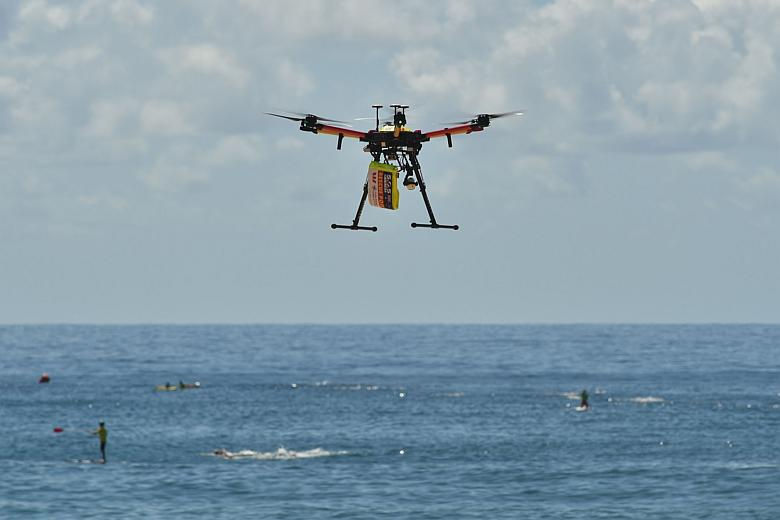
Drone patrols have become one of NSW's primary shark mitigation tools. Surf Life Saving NSW drones patrol popular beaches, identify sharks from the air, track their movements, warn swimmers using loudspeakers, and assist with rescues and other coastal hazards.
Following several recent shark incidents, the NSW Government significantly expanded the program in 2026, introducing year-round monitoring at around 70 beaches, including Sydney's major ocean beaches. Artificial intelligence is also being trialled to improve shark detection, with drone footage monitored in real time and integrated into SharkSmart alerts.
Acoustic listening stations
Many sharks caught on SMART drumlines are fitted with acoustic transmitters. Listening stations installed along the coastline, including at beaches in the Northern Beaches, Waverley and Randwick, detect tagged sharks when they swim within range. These detections alert authorities, contribute to SharkSmart notifications and provide scientists with valuable information about shark movements.
SharkSmart app

The NSW Government's SharkSmart app provides real-time shark sightings, tagged shark detections, drone observations, beach closures, safety advice and information about shark mitigation equipment. It has become an important tool for swimmers, surfers, fishers and other ocean users.
Current approach
NSW's shark management strategy now focuses on reducing risk while minimising impacts on marine wildlife. Rather than relying solely on shark nets, the state uses a layered approach combining seasonal shark nets, SMART drumlines, drone surveillance, acoustic listening stations, shark tagging, scientific research, community education through the SharkSmart program and real-time digital alerts. The NSW Government describes the Shark Management Program as the world's largest integrated shark mitigation program, and it continues to evolve as new technologies become available. Marine scientists generally agree that while no single method can eliminate shark risk entirely, combining multiple technologies provides earlier detection, more effective public warnings and better protection for both beachgoers and marine wildlife.


